The Beautiful Probability of Dreams: Journey to IISER Berhampur
Reviewed by Debanuj Chatterjee
Growing up in rural West Bengal, the traditional script for a girl’s education was quite simple. I was expected to be no exception to this rule. However, during my 12th standard, logic interrupted that script. I found myself deeply drawn to science, specifically the absolute clarity of mathematical reasoning.
Determined to explore this further, I went on to pursue my Math Honours at Raja Peary Mohan College, Calcutta University. I didn’t study the subject to fit into a pre-determined box; I studied it simply because I fell in love with how mathematics speaks at its own beat and beauty. This passion deepened during my Master’s at IIEST Shibpur, which became the exact place where my interest pivoted from just absorbing textbooks to creating new knowledge through research.
Life, however, took its own turn. Following my Master’s, I got married and faced a career break of around three years. In our society, a break like that often marks the quiet end of a woman’s academic aspirations. But I was fortunate. My husband Dr. Sekhar Ghosh was a constant pillar of support throughout this transition. While our society often expects women to compromise, he constantly pushed me to pursue my goals. His belief in my abilities helped me overcome my self-doubt, giving me the confidence to bridge the career gap and take the next step. Both my husband and I shared a deep love for mathematics and a final aim to pursue research.
Starting My PhD In Statistics
With that shared strength, I returned to academia and began my Ph.D. at NIT Rourkela in Statistics. Though mathematical analysis was my first love, my Master’s in Applied Mathematics at IIEST Shibpur pulled me in a different direction. During my coursework, things began to click differently. I realised that while mathematics provided the perfect language and structural framework, statistics provided the actual tools to solve real-world problems where nothing is certain. This practical connection—seeing equations directly solve real-life problems—became the exact motivation that pushed me to start my Ph.D. in Statistics.
I owe a massive debt of gratitude to my advisors, Dr. Suchandan Kayal and Dr. Debajyoti Choudhuri. They shaped my statistical fundamentals, keeping me ready for the global stage and transforming my curiosity into rigorous scientific inquiry.
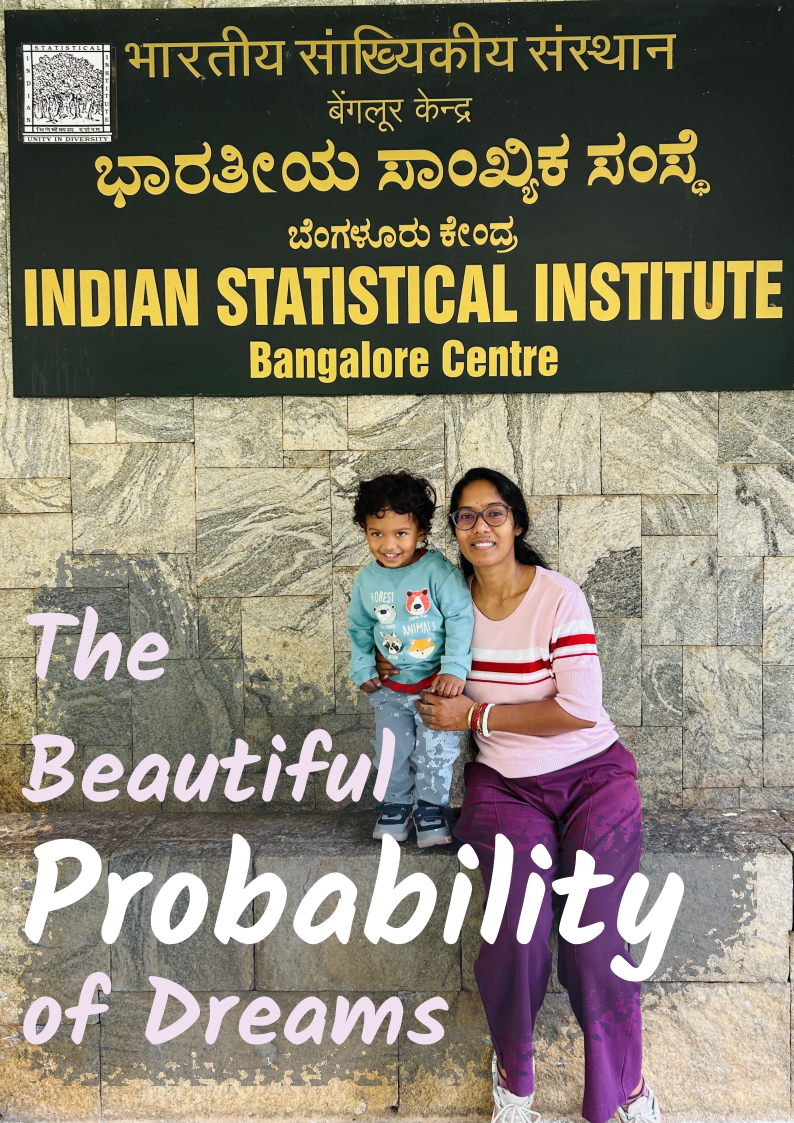
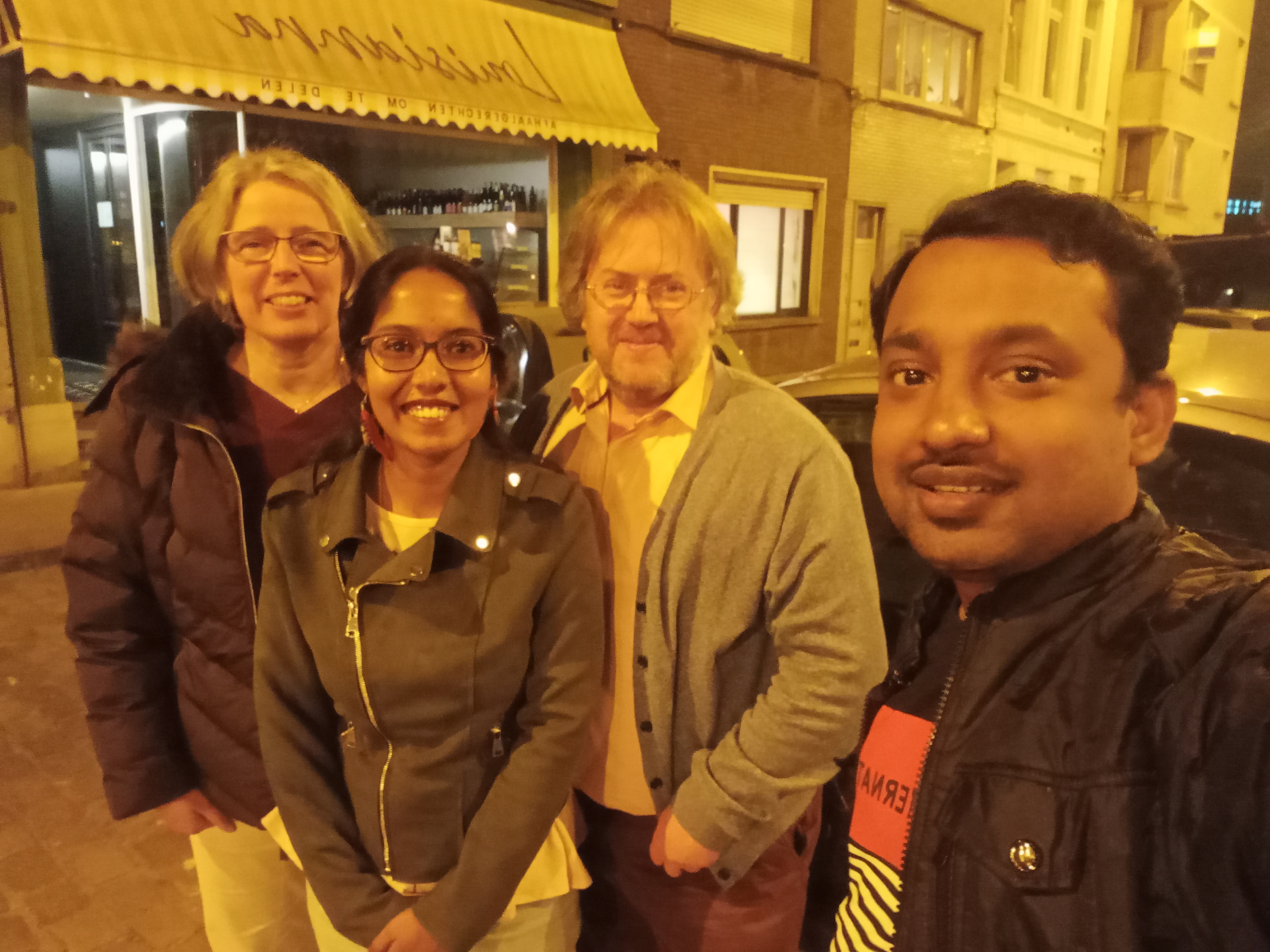
The next chapters acted as major milestones that completely reshaped my research outlook. I had the opportunity to visit Ghent University in Belgium, and later, joined as a Visiting Scientist at Indian Statistical Institute (ISI) Bangalore. Every new campus brought a fresh perspective and a new way of looking at research. Working with different research groups didn’t just expand my academic outlook—it showed me that the best science thrives on global collaboration and shared ideas.
After that, I served as an Assistant Professor in the Department of Mathematics at SRM University, Andhra Pradesh, for around one year. Teaching and interacting with young minds was a completely different experience. It forced me to look at mathematics from a whole new angle, adding a fresh and rewarding direction to my academic journey.
To wrap up an incredible year of teaching, my personal and professional lives reached their biggest milestones simultaneously. First, I received the prestigious NPDF fellowship from ANRF, Government of India. This opened the doors to ISI Bangalore as an NPDF Post-Doctoral Fellow. Secondly, I became a mother.
Post-Doctoral Research As A New Mother
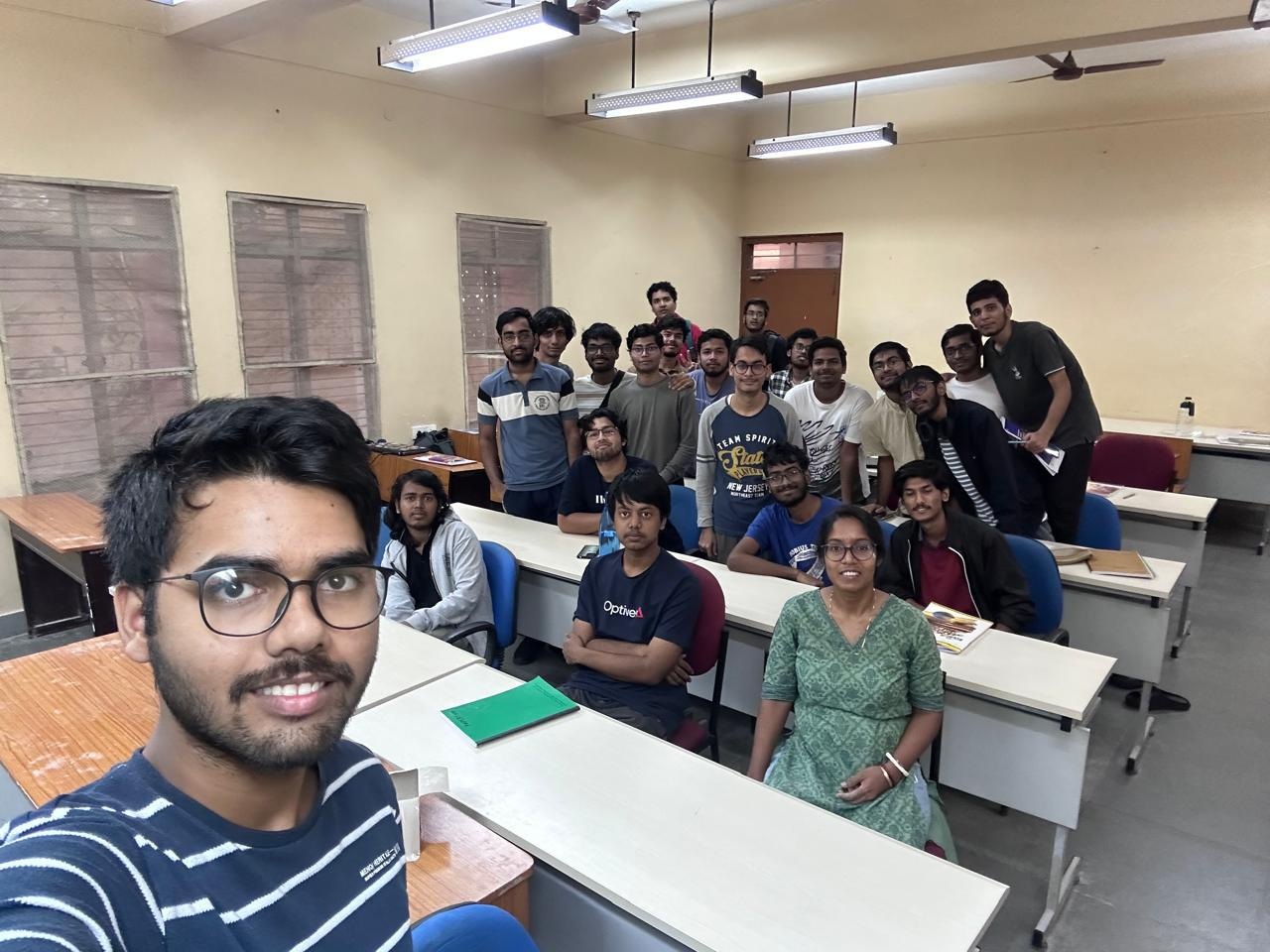
I started my Post-Doctoral study at ISI Bangalore with my newly born son. As a new mother, I found myself in a challenging situation, balancing my academic career and my responsibilities. But my husband, mentor Prof. Mohan Delampady and the entire ISI Bangalore community stood by me completely. Their support and understanding helped me get through that difficult time smoothly.
During this period, my interactions with him and Prof. Siva Athreya completely transformed my academic perspective. They supercharged my interest in statistical inference and inspired me to dive deep into the interface of stochastic ordering and inferential methodology. It truly drove me to ask fresh research questions that connected theoretical probability directly to practical, real-world problems. During this tenure, I also got the opportunity to teach B.Math students, which added a whole new dimension to my journey. It made me realise that mathematics and statistics are not just subjects to be read from textbooks—they are languages to be understood and used to connect with young minds.
My early research focused on stochastic comparisons of order statistics arising from independent and dependent observations. In particular, I have been interested in establishing stochastic inequalities using tools from vector and matrix majorization theory. I mainly developed ordering results of order random variables arising from general families of distributions and apply the established results in different fields like, reliability theory (to find better reliability systems, reliability bounds, see [2,4,6,7,9]), insurance analysis (comparing the extreme claim amounts, see [3,5,8]), auction theory (compare bid amounts in different types of auctions, see [2,6]). These mathematical frameworks provide powerful mechanisms for comparing random phenomena and understanding how heterogeneity, dependence, and parameter variations influence system behaviour. Such comparisons have important implications in diverse areas ranging from reliability engineering and actuarial science to insurance analysis and industrial applications in aeronautics and automotive systems.
During my Ph.D., I absolutely fell in love with reliability theory and survival analysis! These fields are all about figuring out exactly how long a system or a product can last before it hits a breaking point. Think of it like predicting exactly when a phone battery will finally give up, or tracking how long a life-saving medical treatment will keep a patient healthy. What completely hooks me is using solid, hardcore mathematics to map out how things behave over time. It is incredibly exciting to see how these equations empower us to make sharp, data-driven decisions—even when the real-world data is messy and incomplete!
My Research On Statistical Predictions
Today, my research focuses on reliability theory, survival analysis, stochastic ordering, and Bayesian analysis. At its core, my work seeks to answer questions related to uncertainty. How can we compare systems whose future behaviour is uncertain? How can we predict reliability when complete information is unavailable? How can statistical methods help us make better decisions under risk?
To put it simply, reliability theory looks at how systems perform and how long they last—whether we are talking about engineering parts or complex communication networks. Survival analysis tackles similar questions, focusing on the exact time it takes for an event to happen. Then there is stochastic ordering, an area that interests me deeply, which provides the mathematical tools to compare uncertain quantities and balance risks. On top of that, Bayesian methods allow us to combine what we already know with fresh, observed data. This makes our final conclusions much more realistic and practical for the real world.
As my research progressed, I became increasingly interested in situations where the number of observations or system components is itself random. This transition naturally led me to study order statistics for the case of random number of observations, particularly random minima and maxima. While classical statistical theory often assumes a fixed sample size, many real-world systems operate under conditions where the number of observations, events, or components is inherently uncertain. Such uncertainty introduces new mathematical challenges and motivates the development of novel probabilistic methodologies.
Currently I am working on establishing rigorous stochastic comparisons among such random extremes under different distributional assumptions and dependence structures. By developing new stochastic inequalities and ordering results, I aim to understand how uncertainty in sample size, heterogeneity among components, and dependence among observations influence system performance and risk characteristics (see [9,10,11]).
The importance of stochastic ordering has grown significantly in recent years (see [1]). Modern societies increasingly rely on risk-sensitive systems, ranging from financial markets and insurance portfolios to transportation networks, healthcare systems, and critical infrastructure. At the same time, with the boom in artificial intelligence and machine learning, everyone is realising how important it is to measure uncertainty. As our predictive models get smarter, it is not enough to just guess the final result. We also need to understand the variations, the reliability, and the worst-case scenarios. This is exactly where stochastic ordering steps in. It provides us with a solid mathematical framework for comparing risks, evaluating different systems, and making smart decisions when things are uncertain.
Taking Stock
Moving forward, my main goal is to build new mathematical frameworks that help us make sense of uncertainty, no matter how complex the systems become. My long-term vision is to bring stochastic ordering, dependence modelling, and modern statistics together into one powerful approach. This will help us solve tough, real-world challenges across diverse fields like finance, public health, climate science, and new data technologies. Today, our world is completely interconnected, and dealing with uncertainty is part of everyday life. I deeply believe that developing solid, reliable math tools to compare and measure risks will play a massive role in future scientific breakthroughs and in helping society make smarter decisions
Today, standing as a faculty member at IISER Berhampur, I look back at that rural girl who never imagined to be here. I am reminded that a career break is not a full stop, and societal expectations are not boundaries. Mathematics gave me a voice, and my goal now is to help my students find theirs.
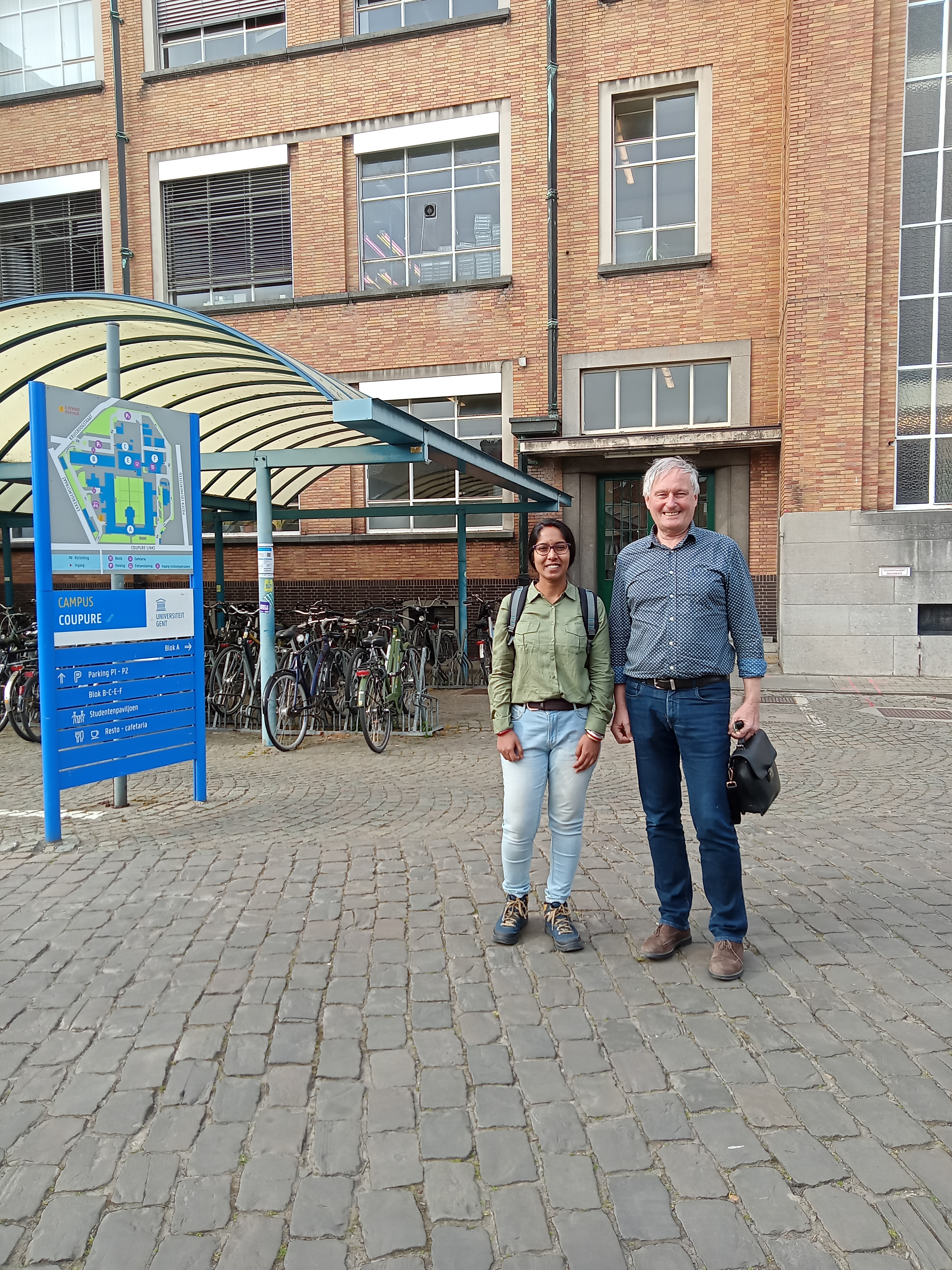

Dr Sangita Das is an Assistant Professor in the Department of Mathematical Sciences at the Indian Institute of Science Education and Research, Berhampur. Her research focuses on developing probabilistic and statistical methodologies with applications in reliability engineering, risk analysis, and data-driven decision sciences.
References
- Balakrishnan, N. and Zhao, P. (2013). Ordering properties of order statistics from heterogeneous populations: a review with an emphasis on some recent developments. Probability in the Engineering and Informational Sciences, 27(4):403-443.
- Das, S. and Kayal, S. (2020). Ordering extremes of exponentiated location-scale models with dependent and heterogeneous random samples. Metrika, 83(8):869-893.
- Das, S. and Kayal, S. (2021). Ordering results between the largest claims arising from two general heterogeneous portfolios. Filomat, 35(4), 1315-1332.
- Das, S. and Kayal, S. (2021). Some ordering results for the Marshall and Olkin's family of distributions Communications in Mathematics and Statistics, 9(2):153-179.
- Das, S., Kayal, S. and Balakrishnan, N. (2021). Orderings of the smallest claim amounts from exponentiated location-scale models. Methodology and Computing in Applied Probability, 23(3), 971-999.
- Das, S., Kayal, S. and Choudhuri, D. (2021). Ordering results on extremes of exponentiated location-scale models. Probability in the Engineering and Informational Sciences, 35(2), 331-354.
- Das, S., Kayal, S. and Torrado, N. (2021). Ordering results between extreme order statistics in models with dependence defined by Archimedean [survival] copulas, Ricerche di Matematica, 73(4), 1997-2033.
- Das, S., Kayal, S. and Balakrishnan, N. (2022). Ordering results for smallest claim amounts from two portfolios of risks with dependent heterogeneous exponentiated location-scale claims, Probability in the Engineering and Informational Sciences, 36(4), 1116-1137.
- Samanta, R. J., Das, S and Balakrishnan, N., (2024), Orderings of extremes among dependent extended Weibull random variables, Probability in the Engineering and Informational Sciences, 38(4), 705-732.
- Das, S and Balakrishnan, N, (2025), Ordering results for random maxima and minima from two dependent Kumaraswamy-generalized distributed samples, Statistics, 9(2), 153–179.
- Das, S. (2026). Ordering results for extreme claim amounts based on random number of claims, Ricerche di Matematica, 1-27. DOI: 10.1007/s11587-026-01094-9.